

How to become a furniture dealer

A furniture dealer sources, evaluates, prices, lists, and sells furniture repeatedly.
The simplest path is to pick a lane, source carefully, and build a trustworthy profile.
What a furniture dealer actually does
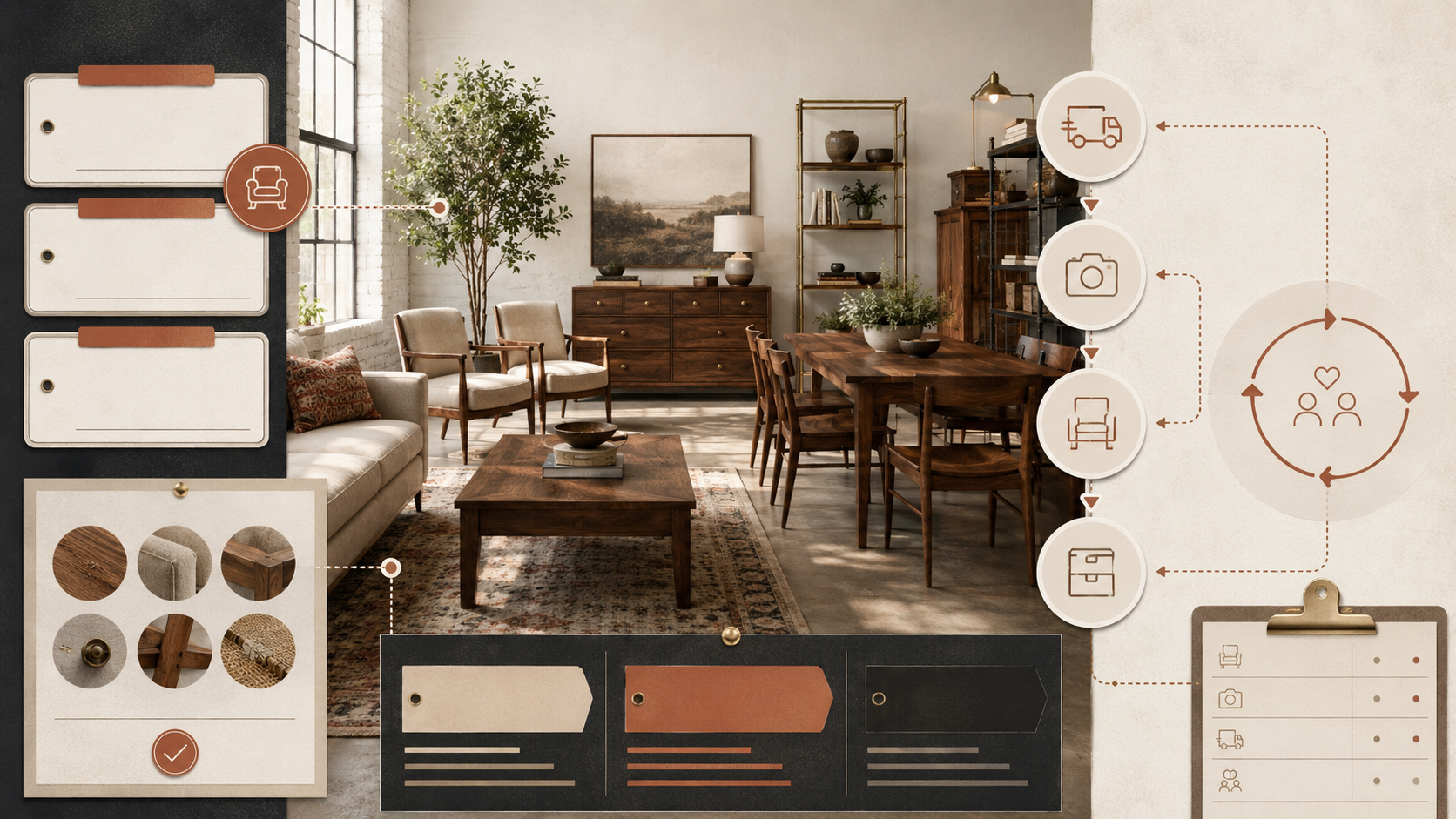
Dealing furniture is more than buying and reselling. It is a repeatable system.
A furniture dealer:
- Sources inventory from estate sales, auctions, moving sales, and private leads
- Checks condition, repair needs, and cleaning before buying
- Researches what similar pieces have actually sold for
- Sets a price that accounts for cost, time, and demand
- Photographs and lists each piece with honest, complete details
- Handles buyer questions, pickup logistics, and handoff
- Builds a reputation with repeat buyers over time
The more repeatable each step, the easier it is to scale.
Pick your dealer lane
Reach local buyers and sellers on Asherfield.
Reserve a spotEvery successful dealer starts with a clear focus. General resale is harder to price and harder to market.
Common dealer lanes:
- Used everyday furniture — solid demand, fast turnover, lower margins. A good starting point for volume sellers.
- High-end furniture — higher margins, longer time to sell, buyers need more detail. See how to sell high-end furniture online.
- Vintage furniture — era and style drive value. See where to sell vintage furniture.
- Antique furniture — age, provenance, and rarity matter most. See where to sell antique furniture.
- Flipped and refinished furniture — you add value through restoration. Margins depend on skill and time cost.
- Estate sale furniture — high volume, compressed timelines, varied quality.
Most dealers start with one lane. Expanding is easier once you can price your niche confidently.
Start with one niche before expanding
Selling everything is a common mistake for new dealers.
A narrow lane builds taste faster. You learn what sells quickly versus slowly. You develop pricing instinct. You attract buyers who come back for more of the same.
A dealer known for solid mid-century pieces builds real trust in that category. A dealer selling anything and everything builds no particular reputation.
Once you can price your niche confidently, expanding is a deliberate choice — not a scattered one.
Source inventory carefully
Good sourcing is the difference between strong margins and costly mistakes.
Where dealers find inventory:
- Estate sales — often the richest single-day source
- Local sellers — private listings, community groups, neighborhood posts
- Moving sales — time pressure creates motivated sellers
- Auctions — previewing in person is essential before bidding
- Office cleanouts — volume opportunities with commercial-grade pieces
- Private leads — relationships built over time
Before buying, check the size relative to your vehicle and storage. Check visible damage, repair cost, and local resale demand.
A piece that looks like a deal can turn into a loss once storage time, cleaning, and repair are factored in.
Learn basic furniture valuation
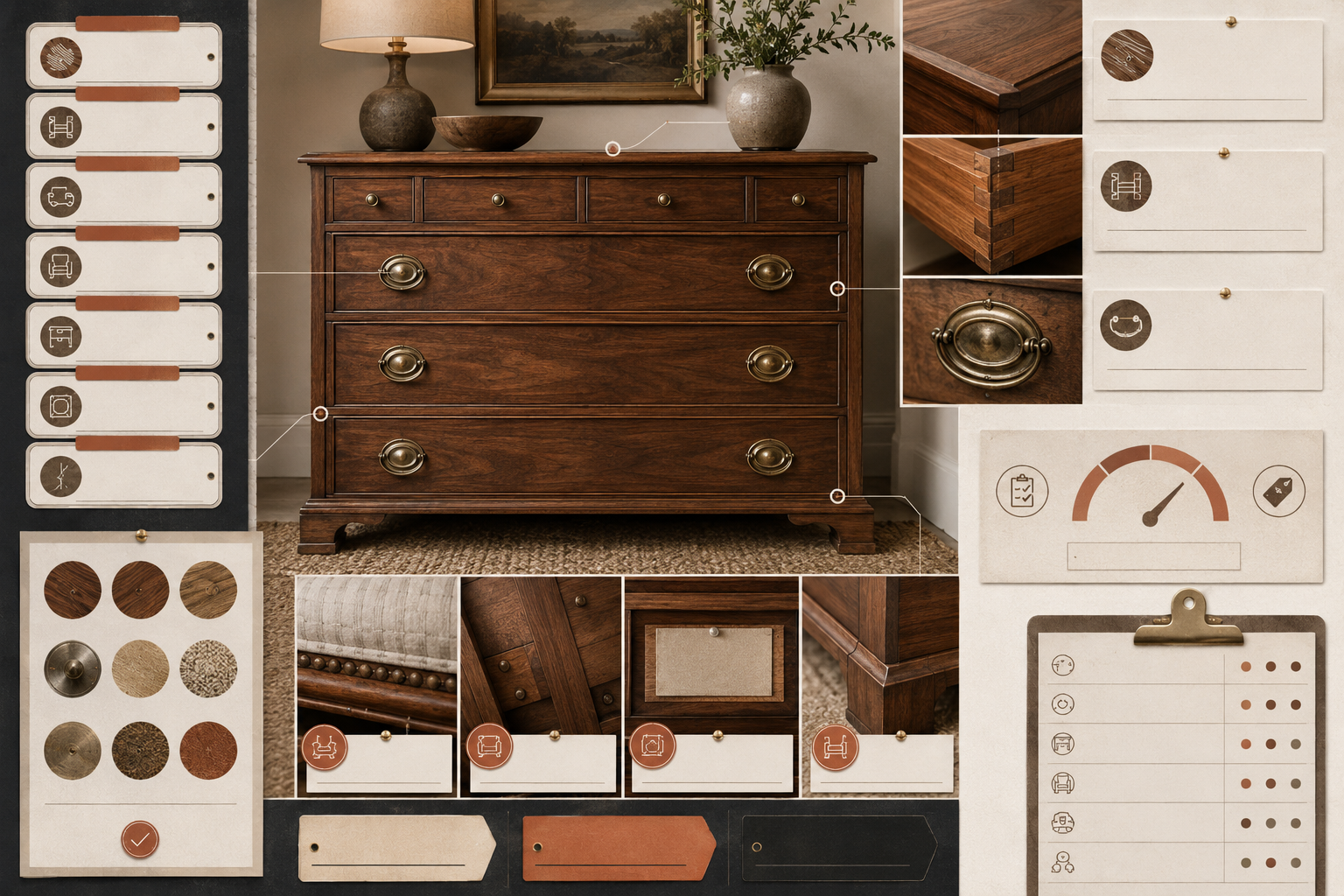
Dealers who price well buy better. Pricing confidence starts with knowing what drives value.
Key valuation factors:
- Material — solid wood versus veneer versus particle board
- Maker or brand — known studios, recognized designers, heritage brands
- Age — documented age adds value; guessed age is a risk
- Style — demand for styles changes by city and by season
- Condition — a graded, honest condition note is more useful than "good"
- Local demand — the buyer needs to be able to pick it up
- Size and weight — heavy or oversized pieces limit your buyer pool
A resale value tool helps you benchmark a piece before you buy or list it.
Understand paperwork basics
Requirements vary by location, sales activity, and business setup. This is not legal or tax advice.
Depending on your location and setup, you may need to check:
- Business registration — sole proprietor, LLC, or other structure
- Sales tax permit — required in most states for regular resellers
- Resale certificate — lets you buy inventory without paying sales tax on it
- Local business permits — varies by city and county
- Recordkeeping requirements — some states require records for used goods dealers
Rules vary by location and business activity. When in doubt, talk to a qualified professional.
The SBA licenses and permits guide is a useful starting point for understanding what may apply to your situation.
For a state-level example: Texas requires most resellers to register for a sales tax permit. Check your own state's requirements directly.
Keep clean records
Records are how you know whether you are actually profitable.
Track these for every piece:
- Cost paid for the item
- Repair or cleaning cost
- Storage cost, if applicable
- Date listed
- Sale price
- Pickup notes and any logistics cost
- Net profit after all costs
- Taxes or fees, if applicable
A spreadsheet works fine at small scale. The goal is to know your real margin — not just your gross sale price.
The IRS publishes general guidance on business recordkeeping for small businesses and self-employed sellers.
Build trust before scaling
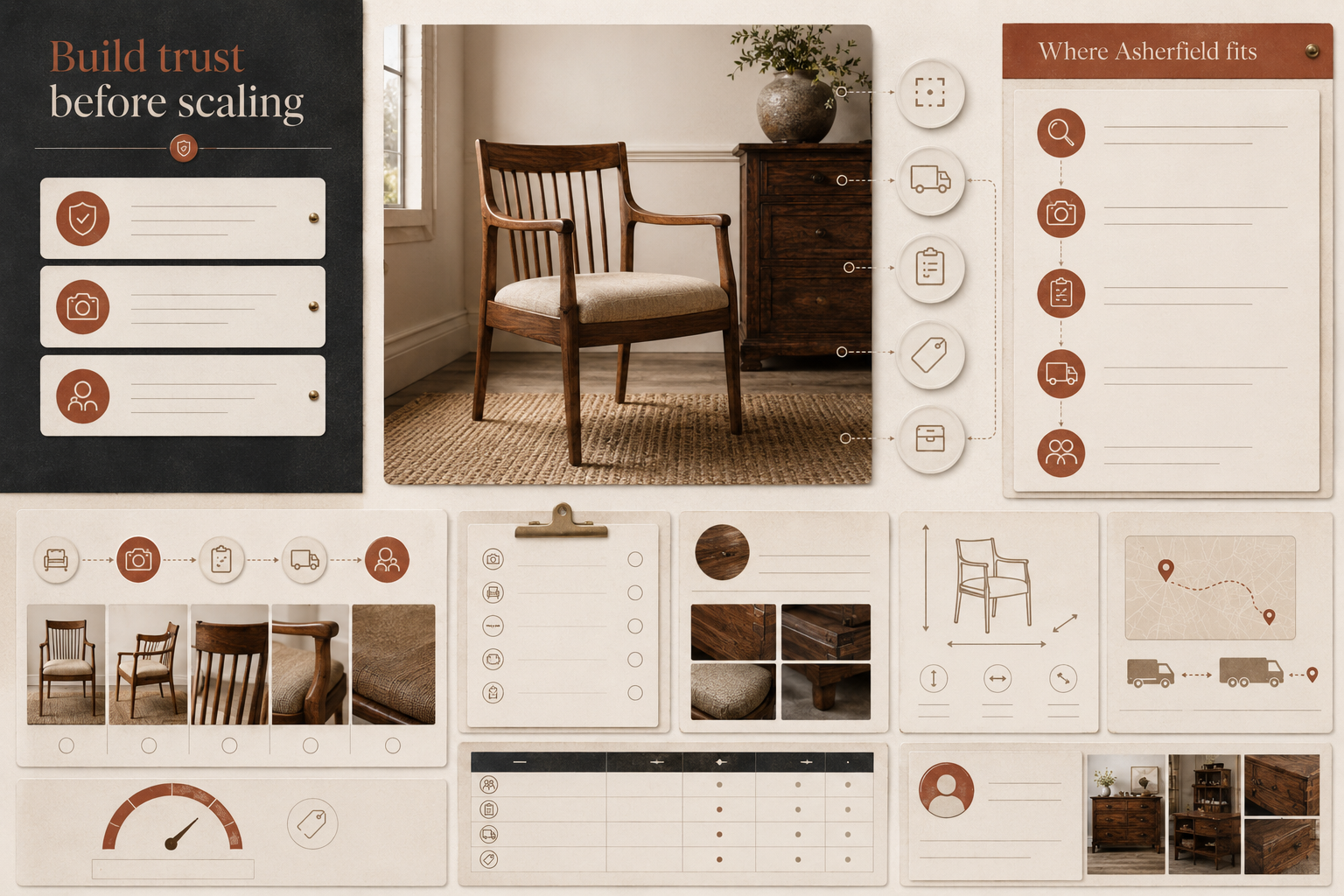
Trust is what turns a first-time buyer into a repeat buyer.
Trust-building practices that matter most:
- Clear, well-lit photos from multiple angles
- Exact dimensions: height, width, and depth
- Honest condition notes with visible flaws stated clearly
- Clear pickup rules stated before the buyer commits
- A complete, consistent seller profile
- A repeatable listing style buyers can recognize
Buyers who trust you reach out faster. They negotiate less. They return.
A business built on vague listings and difficult handoffs creates problems at scale. Clear communication scales much better.
Where Asherfield fits
Asherfield is a furniture-only local marketplace. Every buyer there is looking for furniture specifically.
Listings support detailed descriptions, condition fields, material taxonomy, style categories, and pickup booking slots. That structure helps serious buyers review a piece before reaching out.
There is no commission on any sale. The seller keeps the full price the buyer pays.
Asherfield is not a substitute for auction houses or national platforms. Use those when the piece suits them better.
For dealers who list locally and need buyers who come prepared, a focused marketplace beats a general classifieds feed.
When seller plans make sense
A free listing is the right place to start. Paid plans make sense when you have consistent inventory to manage.
Plans make sense for:
- Dealers listing more than one piece at a time
- Vintage and antique sellers with rotating inventory
- Flippers who move pieces regularly
- Estate sellers with multi-item events
- Any seller who wants featured placement and analytics
The commission rate stays zero on every plan. Higher tiers add more listing slots, priority placement, and seller analytics.
Dealer readiness checklist
Before listing your first piece as a repeat dealer, check these basics.
- I know my furniture lane.
- I know where I will source inventory.
- I know my maximum buy price before a piece stops being profitable.
- I can estimate resale value before buying.
- I can photograph furniture clearly from multiple angles.
- I can write honest condition notes with visible flaws stated.
- I can measure furniture accurately: height, width, and depth.
- I can store inventory safely between purchase and sale.
- I can handle pickup expectations clearly before a buyer commits.
- I can track costs and profit per piece.
- I have checked local business and tax rules for my situation.
- I have a place to list repeat inventory.
Helpful resources
- Licenses and permits — U.S. Small Business Administration. General guide to permit requirements by business type and location.
- Sales tax permit (Texas example) — Texas Comptroller. Shows how state-level permit registration works for resellers. Check your own state's requirements.
- Resale certificate FAQ (Texas example) — Texas Comptroller. Explains when and how resale certificates apply. Check your own state's requirements.
- Business recordkeeping — IRS. General guidance on records every business seller should keep.
Related: where to sell furniture · sell high-end furniture online · where to sell vintage furniture · where to sell antique furniture · Chairish alternatives · furniture resale value calculator · seller plans
People also ask
- What does a furniture dealer do?
- A furniture dealer sources, evaluates, prices, lists, and sells furniture repeatedly. The work includes checking condition, researching value, and handling buyer pickup.
- Do I need a license to become a furniture dealer?
- Requirements vary by state and city. Some states require a sales tax permit or resale certificate for regular resellers. Check your local requirements and speak to a qualified professional if you are unsure.
- How do furniture dealers find inventory?
- Most dealers source from estate sales, moving sales, local sellers, auctions, and private leads. Building relationships over time brings earlier access and better deals.
- How much money do furniture dealers make?
- Income depends on sourcing costs, niche, volume, and local demand. Tracking net profit per piece is the only reliable way to know your real margin.
- What is the best niche for a new furniture dealer?
- Start with what you already know. A narrow lane builds pricing judgment faster and attracts repeat buyers who return for more of the same.
- Can I become a furniture dealer from home?
- Many dealers start from home using personal storage and local sourcing. Storage space, vehicle access, and pickup logistics are the main practical limits.
- When should a furniture dealer use seller plans?
- Plans make sense when you have more than one piece active at a time or when you want featured placement, analytics, and more listing slots.
Helpful resources
- Licenses and permits — U.S. Small Business Administration
- Sales tax permit (Texas example) — Texas Comptroller
- Resale certificate FAQ (Texas example) — Texas Comptroller
- Business recordkeeping — IRS