
A furniture business plan should cover your offer, buyers, costs, and first sales path.
The best plan is clear, lean, and easy to update.
You do not need a giant document first.
You need a plan that helps you make better decisions.
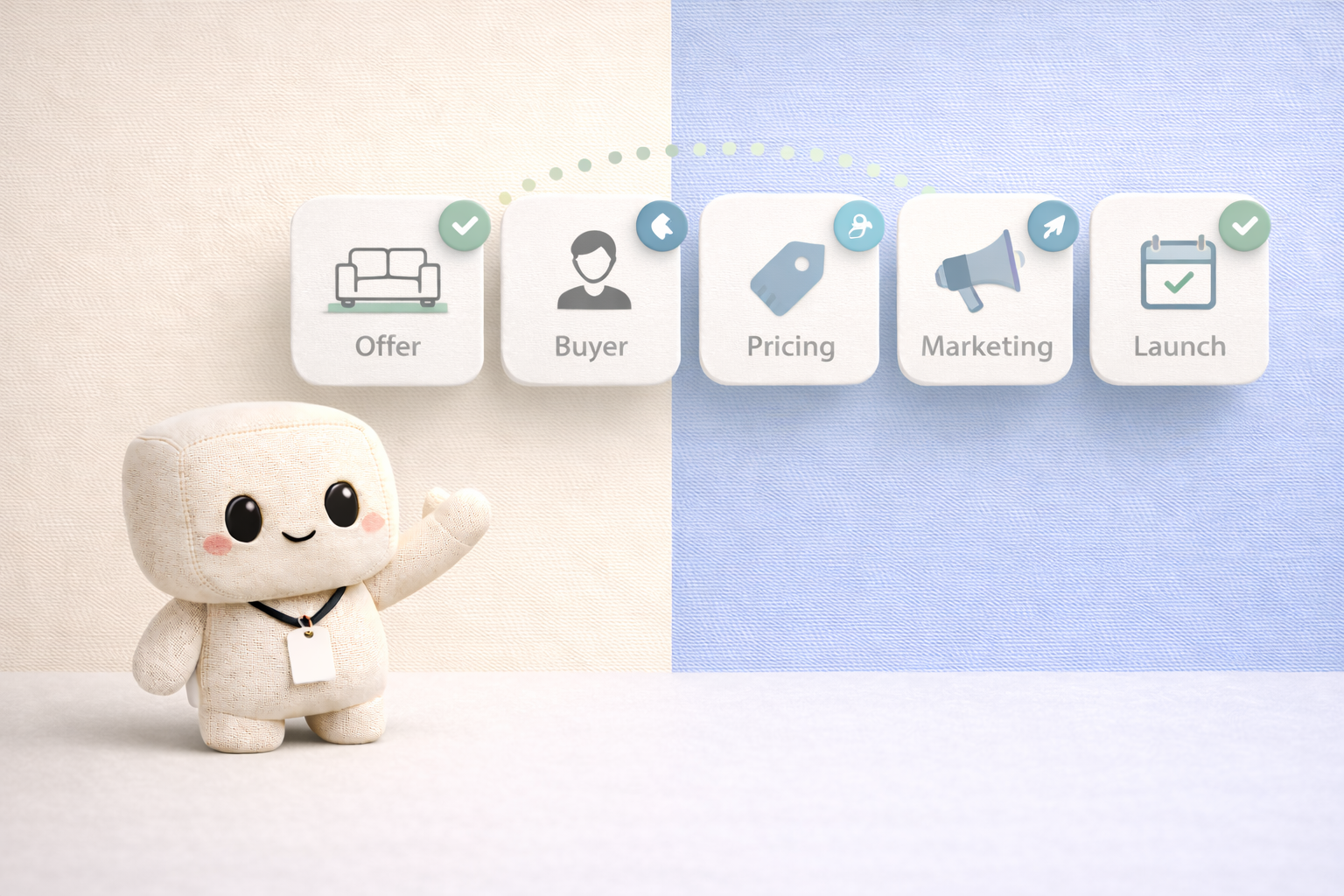
What a furniture business plan must include
Your plan should help you answer a few simple questions.
What do you sell?
Who is it for?
Why will they pick you?
How will you make money?
How will you get your first buyers?
Keep the plan useful
A useful plan is short, honest, and easy to change.
Do not write fluff for the sake of looking serious.
Start with the basics
- Your offer
- Your buyer
- Your market gap
- Your pricing
- Your costs
- Your delivery setup
- Your marketing plan
- Your sales goal
If you need the bigger picture first, see all furniture business models.
Need legal setup help? Read our licenses and permits guide.
Your offer, audience, and market gap
Your offer
Say what you sell in one clean sentence.
Examples: luxury resale furniture, custom tables, clean used bedroom sets, or modern office pieces.
Your audience
Pick one buyer first.
Do not try to win everyone.
Your first buyer might be a mover, renter, homeowner, flipper, or small business.
Your market gap
Show why your business should exist.
Maybe local buyers want better photos.
Maybe they want cleaner pieces.
Maybe they want easier pickup and less chaos.
If your plan is for a retail path, you can also open a store later with a clearer niche.
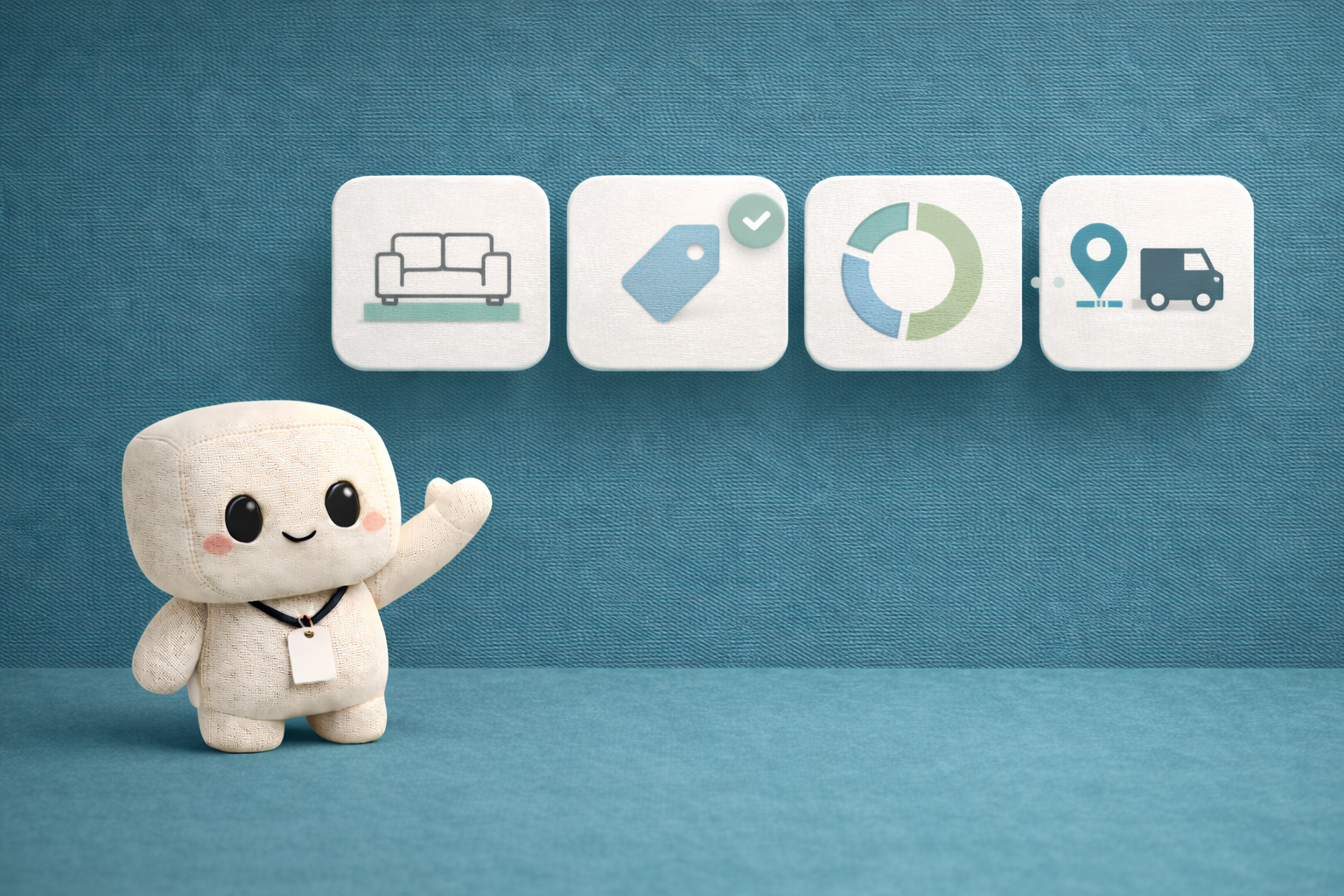
Pricing, margins, and delivery math
Pricing
Your price has to cover more than the item.
It also has to cover time, storage, cleaning, repairs, fees, and delivery.
Need pricing help? See our furniture markup guide.
Margins
Know your gross margin on each item.
Know your break-even point for the business.
If you do not know both, the plan is weak.
Delivery math
Bulky items cost money to move.
Plan for truck time, labor, fuel, route waste, and missed pickups.
Delivery is not a side note.
It is part of the offer.
If you still need the numbers, estimate startup costs.
What numbers matter most
- Average sale price
- Average cost per item
- Gross margin per item
- Monthly fixed costs
- Delivery cost per order
- Lead-to-sale rate
- Break-even sales target
- Cash on hand
You do not need a fancy spreadsheet first.
You do need honest numbers.
Marketing plan for the first 90 days
Days 1 to 30
Get your offer clear.
Photograph your best pieces well.
Build listings that answer buyer questions fast.
Days 31 to 60
Track which pieces get clicks, questions, and real pickup interest.
Cut weak inventory and weak messaging.
Days 61 to 90
Double down on what gets clean leads.
Improve your landing pages and listings before spending more on ads.
Keep the first channel mix simple
- Marketplace listings
- Organic social proof
- Email follow-up if you collect leads
- Local content or guides
- Paid promotion only after your core offer works
If you want the fuller traffic plan, plan your marketing.

Simple one-page plan template
Start here if a full plan feels heavy.
1. Offer
What do you sell?
2. Buyer
Who is the best-fit customer?
3. Problem
What pain or friction do you remove?
4. Why you
Why should buyers trust you over other options?
5. Revenue
How do you make money on each order?
6. Costs
What fixed and variable costs matter most?
7. First channel
Where will your first buyers come from?
8. 90-day goal
What result proves this business is working?
When to add paid boosts and ad spend
Do not use ads to fix a weak offer.
Fix the offer first.
Fix the listing first.
Fix the handoff first.
Add paid spend when these are true
- Your best listings already get interest
- Your pricing is clear
- Your landing page does not confuse buyers
- Your delivery or pickup process is clear
- You can track what happens after the click
Where to start
Start with the smallest paid move that can teach you something.
That might be a boosted listing.
That might be one paid social test.
That might be one sponsored placement on Asherfield.
If you want site-level exposure, advertise on Asherfield.
How Asherfield fits into the plan
Asherfield fits best when the item is clean, desirable, and buyer-ready.
It helps reduce noise and tighten the handoff path.
That makes it useful for stores, makers, and resellers who want better-fit buyers.
If you also sell a bed frame or other furniture, that can fit here too.
Helpful internal links
Helpful resources
- SBA: write your business plan
- SBA: market research and competitive analysis
- SBA: calculate startup costs
- SBA: break-even calculator
- SCORE: one-page business plan template
- IRS: get an EIN
- Meta business tools
- Meta Pixel docs
- Directorist Ads Manager overview
- Advanced Ads Selling Ads
- Shopify trial (affiliate link)
FAQ
What should a furniture business plan include?
It should cover your offer, buyer, costs, pricing, and first sales plan.
How detailed should it be?
Detailed enough to guide decisions, but not bloated.
Do I need a plan for a small home-based shop?
Yes. Small shops still need clear math and a clear buyer path.
What financials matter most?
Price, cost, margin, fixed costs, delivery cost, and break-even target.
When should I start paying for ads?
Only after your offer and listing flow already work.
Ready to test the plan?
Start with one strong offer and one clean listing path.