

Where to sell vintage furniture

Vintage furniture sells best when the buyer already understands the era, style, and condition. The right platform puts your piece in front of that buyer. The wrong one leaves it sitting for weeks.
The options range from local furniture-only marketplaces to national vintage platforms, antique dealers, and auction houses. Each one works better for certain pieces and certain sellers.
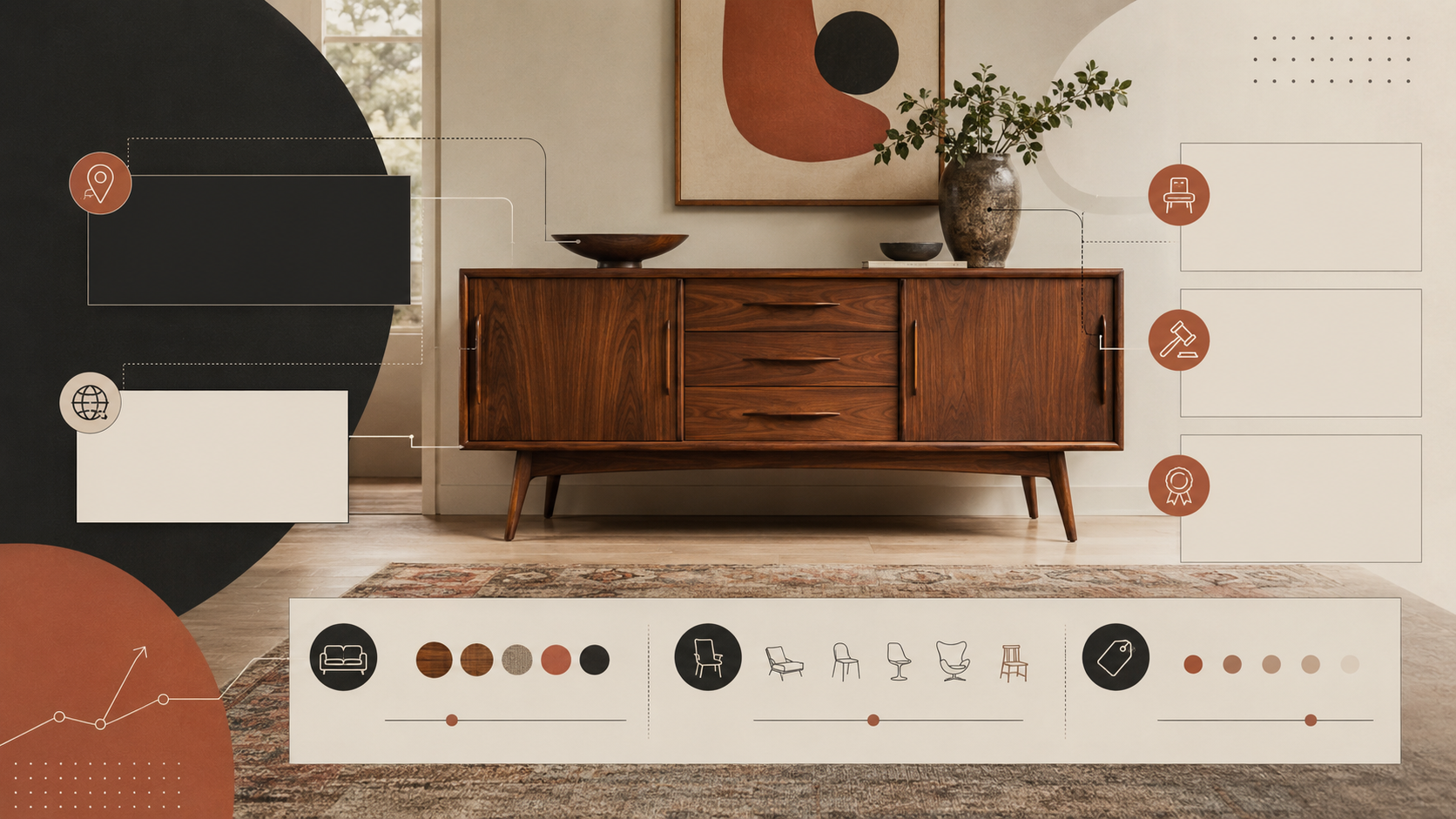
Best places to sell vintage furniture
No single platform is best for every piece. The comparison below covers the most common options for vintage furniture sellers.
| Platform | Fees | Best for | Who sees it | Shipping usually required? |
|---|---|---|---|---|
| Asherfield | No commission; listing plans from free | Local vintage sellers; large or heavy pieces | Buyers searching for furniture in your area | No — local pickup |
| Chairish | Commission-based; varies by seller tier | Designer vintage; nationally sought styles | National design buyers | Usually yes |
| Facebook Marketplace | Free | Fast local sales; lower-priced pieces | Anyone nearby | No |
| Etsy | Listing fee + transaction fee | Vintage items (must be 20+ years old) | National and international shoppers | Usually yes |
| Antique dealer | Dealer buys at trade price; no listing fee | Quick outright sale; clear age or provenance | Dealer is the buyer | No |
| Auction house | Seller's commission; varies by house | Rare or high-demand pieces | Regional or national bidders | Sometimes |
| Consignment shop | Commission on sale; varies by shop | Hands-off local selling | Walk-in customers | No |
When to sell locally
Reach local buyers and sellers on Asherfield.
Reserve a spotLocal selling makes sense when the piece is too large or heavy to ship at a reasonable cost. It also works when buyers expect to inspect the item before committing.
A vintage dining table, credenza, or armoire can weigh several hundred pounds. Shipping those pieces often costs more than buyers are willing to pay. Local pickup removes that friction entirely.
Furniture-specific local platforms draw buyers who are already looking for furniture. General classifieds draw anyone. That difference matters when you need the right buyer, not just any buyer.
When to use a national marketplace
A national platform is worth the extra work when the piece has a narrow, specific audience. Certain styles — Art Deco, Hollywood Regency, Scandinavian Modern — have collectors all over the country.
National platforms usually require shipping. For small, light, or highly valuable pieces where the buyer will pay for shipping, that trade-off can work. For large or fragile pieces, it rarely does.
Commission costs also apply on most national platforms. Factor that into your asking price before you list.
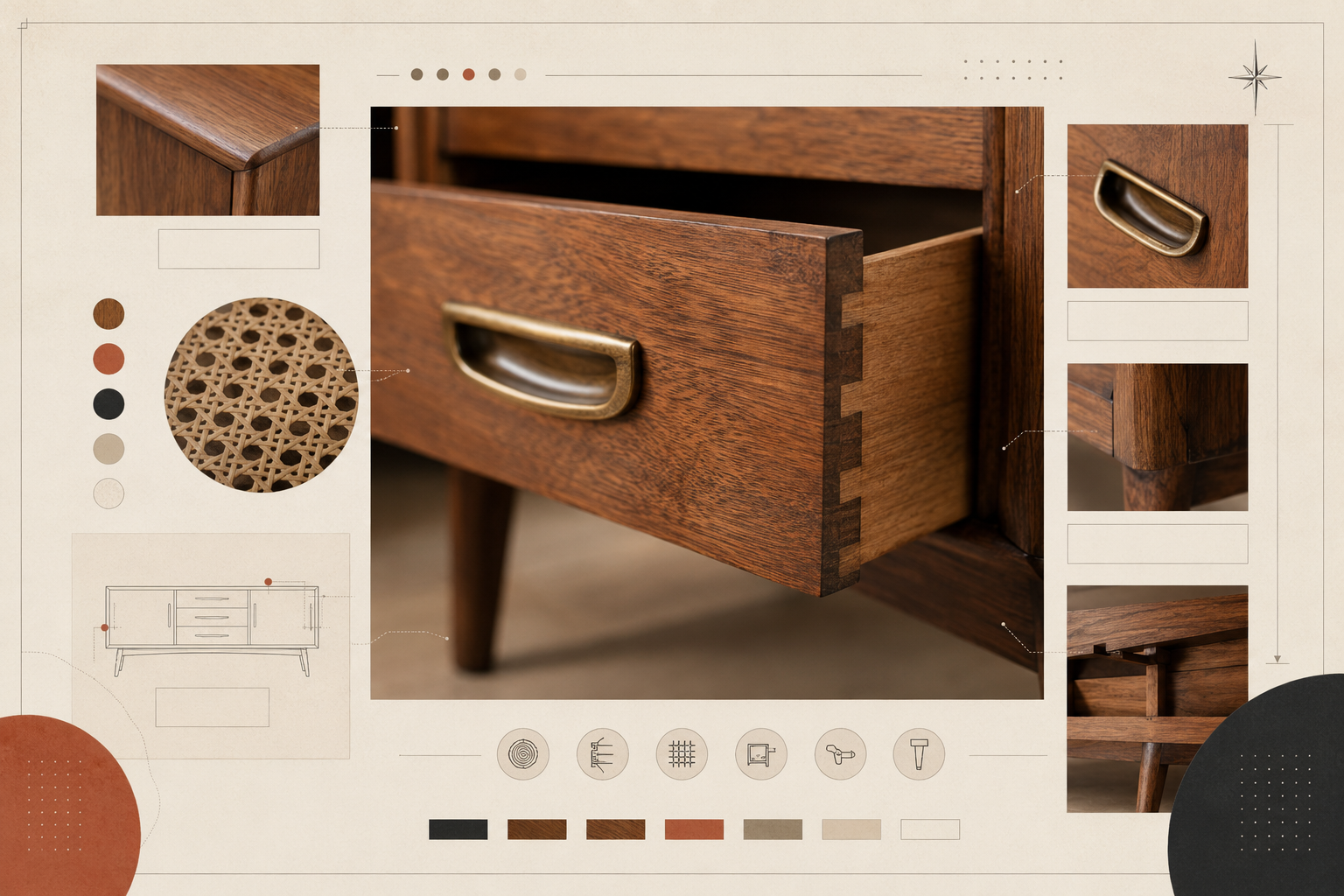
What vintage buyers look for
Vintage buyers want to know what they are getting before they reach out. Surprises after pickup cause problems for everyone.
The details that close sales: style, approximate decade, material, finish condition, original hardware, and clear pickup details. A buyer who understands all of those before contacting you is a serious buyer.
What vintage actually means
Most buyers and platforms define vintage as items from roughly 20 to 99 years old. Items 100 years or older are typically classified as antique. The distinction matters for pricing and for choosing the right channel.
How to describe and photograph vintage pieces
Your title should name the style and approximate decade. "Mid-century modern walnut credenza, 1960s" tells the buyer more than "wooden cabinet." Use the terms buyers actually search for.
In the description, note the material, finish, and any repairs or alterations. List any maker's marks, labels, or stamps. Buyers looking for specific makers search by name.
For photos: shoot from all angles. Include a close-up of the finish, the joinery, and any hardware. Show damage, wear, or repairs honestly — a small scratch photographed clearly is far better than one discovered on pickup day.
Show the piece against a neutral background when possible. Clutter in the background distracts from the furniture and makes it harder to judge proportions.
How to price vintage furniture
Search recent sold listings for comparable pieces before setting your price. Look for similar style, material, condition, and approximate age. What sellers are asking is not the same as what buyers are paying.
Local pricing tends to run lower than national marketplace prices because there is no shipping arbitrage. A buyer in your city who can pick up tomorrow will not pay the same premium as a collector who has to arrange freight.
Start at the upper end of the fair range. If the piece has not sold in three weeks, drop 10–15% and relist. Overpriced furniture that sits too long starts to look like it has a problem, even when it does not.
Condition, original hardware, and documented age all push the price up. Repairs, missing hardware, and undocumented provenance push it down. Be honest about what you have.
Where Asherfield fits
Asherfield is a furniture-only marketplace. Buyers searching there are specifically looking for furniture — not general classifieds, not everything mixed together.
Listings support detailed descriptions, condition fields, and style taxonomy. That structure helps buyers find pieces that match what they are looking for. There is no commission on any sale. The seller keeps the full price the buyer pays.
Pickup scheduling is built into the platform. Buyers can request a time, and sellers can approve or suggest alternatives. That removes the back-and-forth over logistics that slows down general classifieds.
Free listings are available to start. Paid plans add more listing slots, featured placement, and analytics.
Helpful resources
- Find a certified appraiser — American Society of Appraisers. Useful if you need a professional valuation for insurance, estate, or sale purposes.
- Architectural Digest — Design and interiors coverage that helps identify style periods and names for furniture eras.
Related: where to sell furniture · where to sell antique furniture · selling high-end furniture online · how to become a furniture dealer · seller plans
People also ask
- What is the difference between vintage and antique furniture?
- Most buyers define vintage as items made roughly 20 to 99 years ago. Antique furniture is typically 100 years or older. The distinction matters for pricing, buyer audience, and choosing the right channel.
- Is it better to sell vintage furniture locally or online?
- It depends on the piece. Large or heavy pieces are easier to sell locally where buyers pick up in person. Small or highly collectible pieces with national buyer appeal can work well on shipping-based platforms.
- Does Asherfield ship furniture?
- No. Asherfield is a local marketplace. Buyers and sellers arrange pickup directly. There is no Asherfield-managed shipping.
- How do I price vintage furniture?
- Search recent sold listings for comparable pieces before setting a price. Factor in condition, style, original hardware, and local demand. Start at the upper edge of the fair range and adjust after three weeks if needed.
- Do national vintage platforms charge commission?
- Most commission-based platforms take a percentage of each sale. The rate varies by platform and seller tier. Factor that cost into your asking price when comparing channels.
- What photos should I include with a vintage furniture listing?
- Photograph from all angles. Include close-ups of the finish, hardware, joinery, and any damage or repairs. A neutral background helps buyers judge proportions clearly.
Helpful resources
- Find a certified appraiser — American Society of Appraisers
- Architectural Digest — Condé Nast