

Where to sell antique furniture

Antique furniture has specific buyers. The channel you choose can determine whether the right buyer ever sees it.
The main options are local furniture marketplaces, auction houses, antique dealers, national online platforms, and estate sales. Each one serves different pieces and different seller goals.
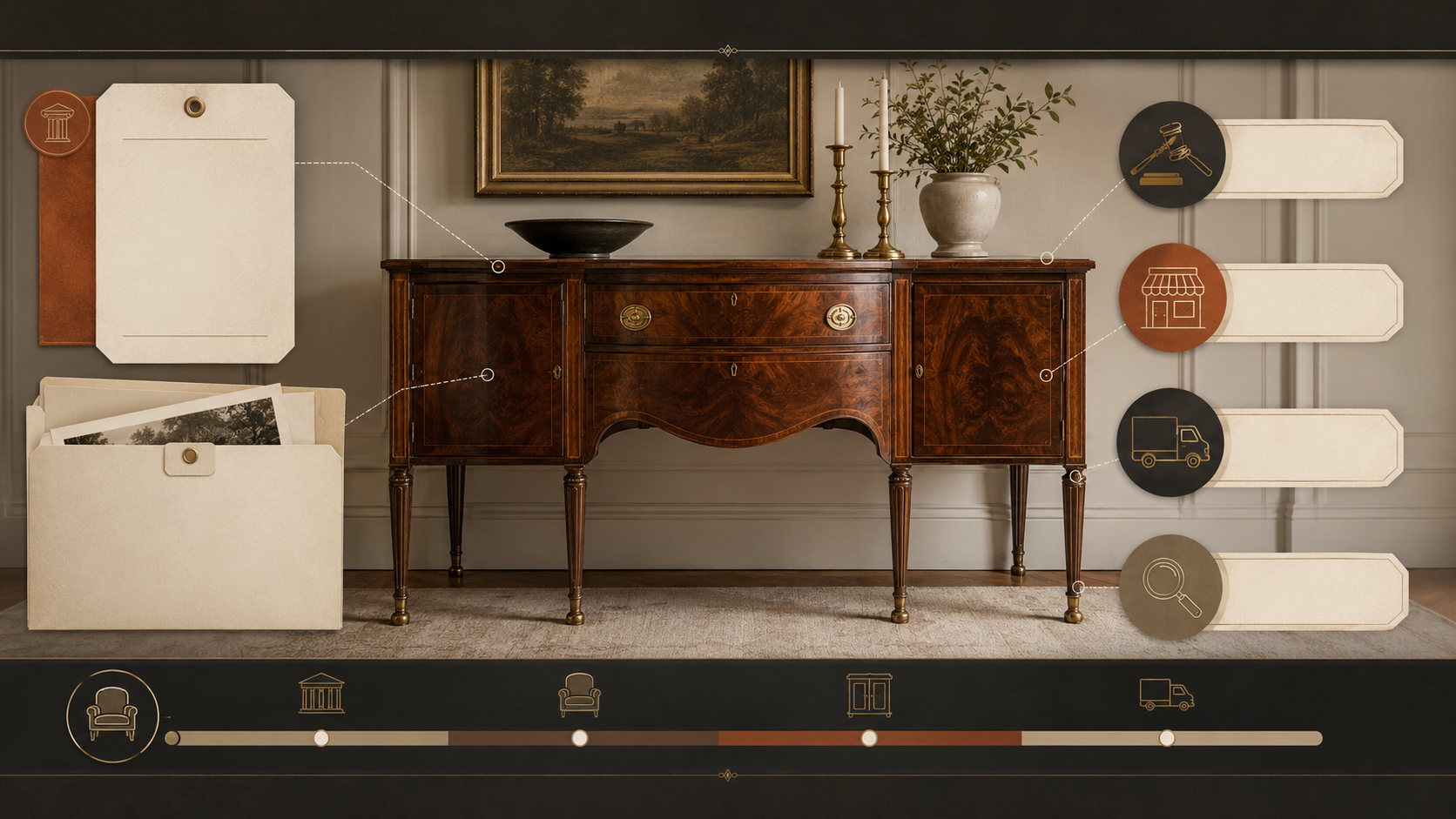
Best places to sell antique furniture
The right channel depends on the piece's value, condition, documented history, and how quickly you need to sell. Here is how the main options compare.
| Platform or channel | Fees | Best for | Who sees it | Shipping usually required? |
|---|---|---|---|---|
| Asherfield | No commission; listing plans from free | Local antique sellers; large or heavy pieces | Buyers searching for furniture in your area | No — local pickup |
| Auction house | Seller's commission; varies by house | Rare, high-value, or well-documented pieces | Regional or national bidders | Sometimes |
| Antique dealer | Dealer buys at trade price; no listing fee | Quick outright sale; clear provenance | Dealer is the buyer | No |
| Chairish | Commission-based; varies by seller tier | Nationally sought antiques and designer pieces | National buyers | Usually yes |
| Facebook Marketplace | Free | Lower-value antiques; fast local sale | Anyone nearby | No |
| Estate sale | Operator's commission; varies by company | Selling a full collection on-site | Local buyers and dealers | No |
When to sell locally
Reach local buyers and sellers on Asherfield.
Reserve a spotLocal selling is usually the right call for large, heavy, or fragile antique pieces. A 19th-century wardrobe or a marble-top sideboard is hard to crate and ship safely. Local buyers can inspect the piece in person and arrange their own transport.
In-person inspection also matters for high-value pieces. Buyers want to see the construction, the finish, and the condition before committing. That is easier to do locally than to negotiate over photos.
Furniture-focused local platforms draw buyers who are already looking for furniture. That audience quality matters more than raw listing volume.
When a national marketplace makes sense
A national platform is worth considering when the piece has a specific collector appeal that may not exist in your local market. Certain periods — American Federal, French Provincial, Arts and Crafts — have buyers everywhere.
National platforms usually require the seller to handle or arrange shipping. For smaller antique pieces where the buyer will pay for careful crating and freight, that can work. For large case goods, the shipping cost can exceed what buyers will pay.
Commission fees apply on most national vintage and antique platforms. Build that into your asking price before listing.
When an antique dealer is the right call
An antique dealer buys directly from you at trade price — typically below retail, because they need room to resell at a profit. You get a certain, fast sale without waiting for an end buyer.
This channel works well when speed matters more than price. It also works when the piece has clear documented history that a dealer can use to market it to their customers.
A dealer's wholesale offer is not the ceiling on what the piece is worth. Get a professional appraisal for high-value pieces before selling to a dealer so you understand the range.
When auction makes sense
Auction works best for pieces that are genuinely rare or highly collectible. Competitive bidding can push prices above what a fixed-price listing would achieve — but only when multiple bidders want the same thing.
Auction houses charge a seller's commission (sometimes called a seller's premium). Rates vary by house and sometimes by the estimated value of the lot. Ask for the full fee structure before consigning.
Most auction houses require the seller to transport the piece to them. They also set the sale date, which may be weeks or months away. If you need a fast sale, auction is rarely the right channel.
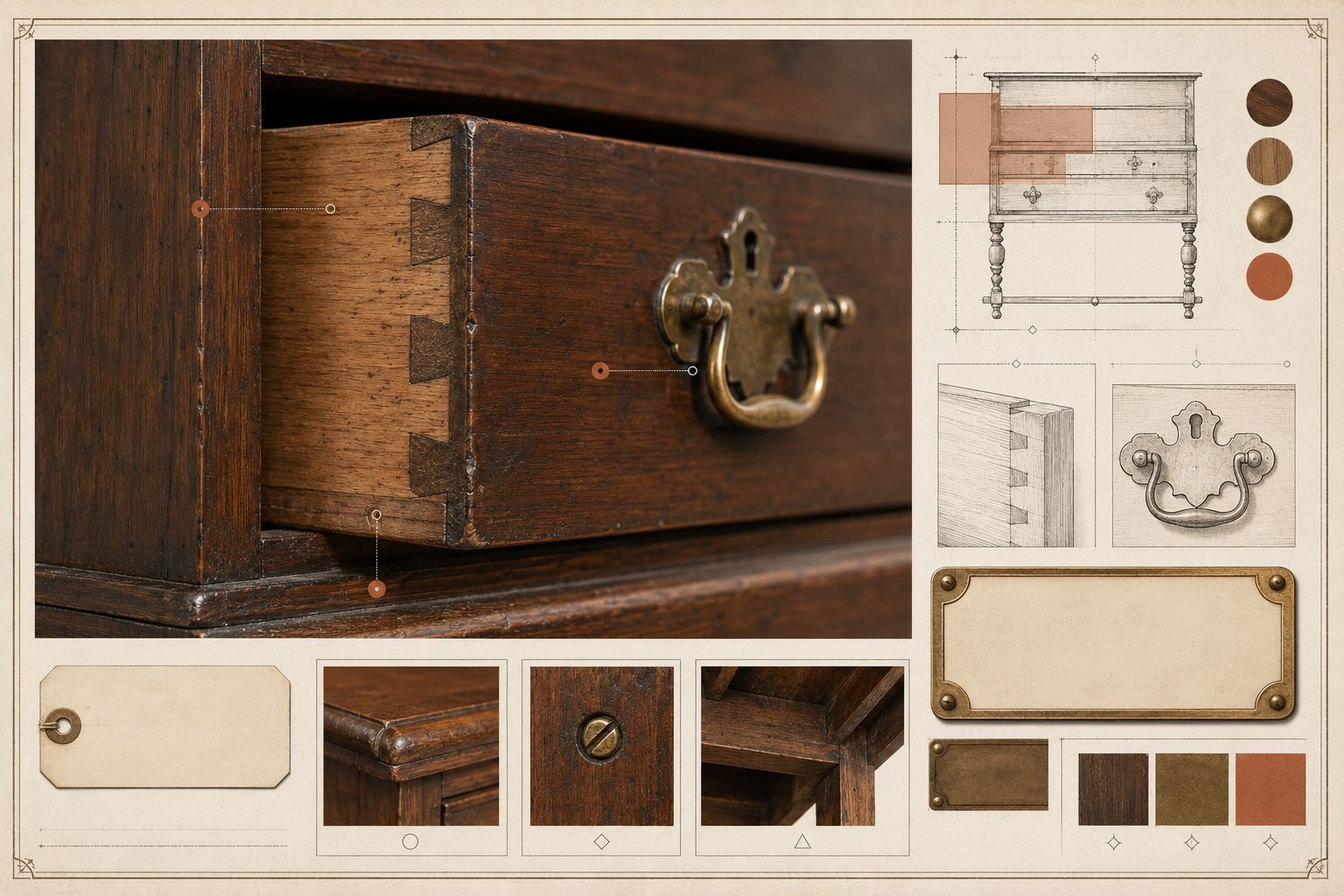
How to describe age, condition, and provenance
State the approximate period in your title and description. "Victorian walnut chest of drawers, circa 1880s" tells a buyer more than "antique wooden dresser." Use the period name buyers are likely to search.
Note the construction details that indicate age. Hand-cut dovetail joints, hand-planed surfaces, and square or cut nails all suggest pre-industrial manufacture. Buyers who know antiques will look for these details in photos.
List any maker's marks, labels, stamps, or retailer's stickers on the piece. Even partial marks help narrow the age and origin. If you have documentation — receipts, appraisals, estate records — mention it. Provenance documentation can significantly affect value.
Be precise about condition. Note any repairs, replaced hardware, refinishing, or structural issues. A buyer who discovers undisclosed damage on delivery creates problems for everyone.
What qualifies as antique
The U.S. Customs Service defines antique as an item at least 100 years old. Many buyers and dealers use the same standard. Items between roughly 20 and 99 years old are generally considered vintage, not antique. The distinction affects how you position the piece and which buyers you will attract.
How to price antique furniture
For high-value pieces, get a professional appraisal before setting a price. An appraiser who specializes in period furniture can give you a documented replacement value and a fair market value — they are not the same number.
Search recent auction results for comparable pieces. Auction databases show what buyers actually paid, not just what sellers asked. That is more useful than listed prices on any platform.
Condition, period accuracy, known maker, and documented provenance all push prices up. Repairs, refinishing, replaced hardware, and missing documentation push them down. Price honestly based on what you actually have.
Dealer and auction prices reflect wholesale trade. Retail to an end buyer can be significantly higher. The right channel for your piece determines which end of that range you can expect.
Where Asherfield fits
Asherfield is a furniture-only marketplace. Buyers searching there are specifically looking for furniture, not general household goods mixed together.
Listings support detailed descriptions, condition fields, and style taxonomy including antique and vintage categories. There is no commission on any sale. The seller keeps the full price.
For antique sellers who prefer local pickup over shipping, Asherfield's buyer pool is focused on furniture and the pickup scheduling tools remove most of the logistics friction.
Asherfield is not a replacement for auction when a piece has genuine collector demand and competitive bidding potential. It is a strong option for antique sellers who want serious local buyers without dealer wholesale pricing or auction timelines.
Helpful resources
- Find a certified appraiser — American Society of Appraisers. Useful for establishing fair market and replacement value before selling high-value antiques.
- Furniture collection — Victoria and Albert Museum. A reference for period identification, construction details, and style names across furniture history.
Related: where to sell furniture · where to sell vintage furniture · selling high-end furniture online · how to become a furniture dealer · used furniture value calculator · seller plans
People also ask
- What qualifies as antique furniture?
- The U.S. Customs Service defines antique as an item at least 100 years old. Most dealers and auction houses use the same standard. Items between roughly 20 and 99 years old are generally classified as vintage.
- Should I get antique furniture appraised before selling?
- For high-value pieces, yes. A professional appraisal documents fair market value and replacement value. It also protects you from underpricing a piece that is more valuable than expected.
- When does an auction house make sense?
- Auction works best for pieces that are genuinely rare or highly collectible. Auction houses charge a seller's commission and control the sale date, so it is not the right channel when speed matters most.
- What is provenance and why does it matter?
- Provenance is the documented history of a piece — who made it, who owned it, and how it came to you. Strong provenance can significantly raise the value of antique furniture. Even partial documentation helps buyers verify age and authenticity.
- Can I sell antique furniture on Asherfield?
- Yes. Asherfield supports antique and vintage furniture listings. There is no commission on any sale.
- How do I find antique furniture buyers near me?
- Furniture-focused local marketplaces, antique dealers, and estate sales all reach buyers in your area. A platform where buyers are specifically searching for furniture will generally attract more serious interest than a general classifieds site.
Helpful resources
- Find a certified appraiser — American Society of Appraisers
- Furniture collection — Victoria and Albert Museum